In this five-part series on the art of presenting we’ve been looking at why and how the energy from five special sources enables you to present with confidence and credibility. And help you to move audiences, yourself and your ideas forward.
In case you missed the other posts, these five sources are…
- Understanding
- You
- Choice
- Delivery
- Development
Fuelled by the energy of understanding and the energy of you, it’s time to take the next step and add more to your energy equation.
In part three it’s time to dive deeper into the magical movement maker…
…the energy of choice.
Presenting with Confidence and Credibility
Picture the scene. You are sitting in the audience, listening to a presentation. The more the speaker speaks, the more confused you get. You try to connect with the content; to understand.
After a while you are so drained from trying you give up. Boredom sets in.
Your mind wanders… What shall I have for tonight’s dinner? Mmmm, pasta would be nice. Chef Alfonso has a tasty recipe…
Oooh, great, the presentations over. Hope the next one’s better!
Sadly, we’ve all been in the audience for one of those.
As we’ve seen in Part 1, moving audiences from awareness to belief to trust; ideas out of the darkness into the light; moving yourself to share and articulate in new ways require energy.
The last thing you need is to take this precious resource away by de-energising yourself and your audience with convoluted, confused content.
So let’s get up-close-and-personal with the energy of choice.
Energy of Choice
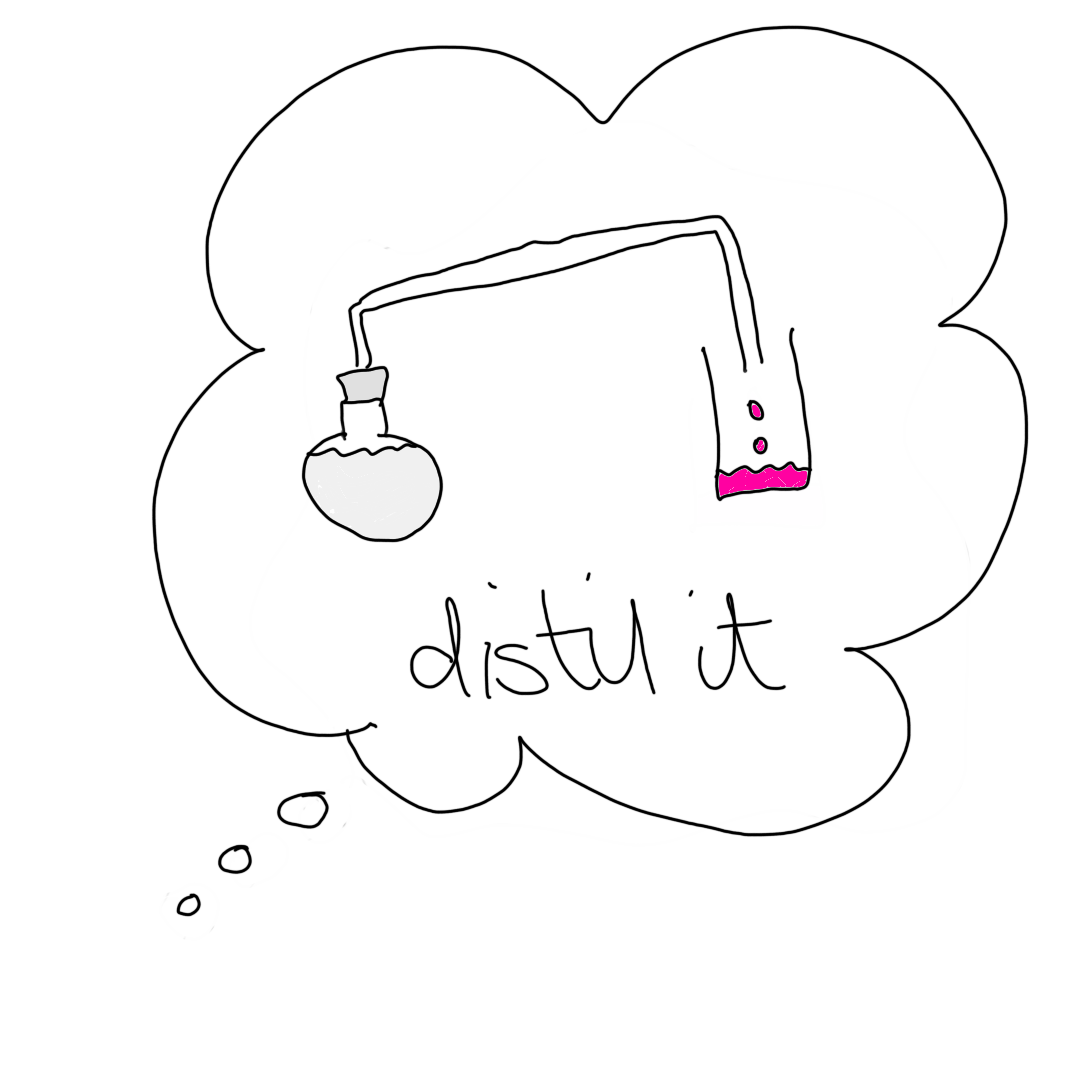
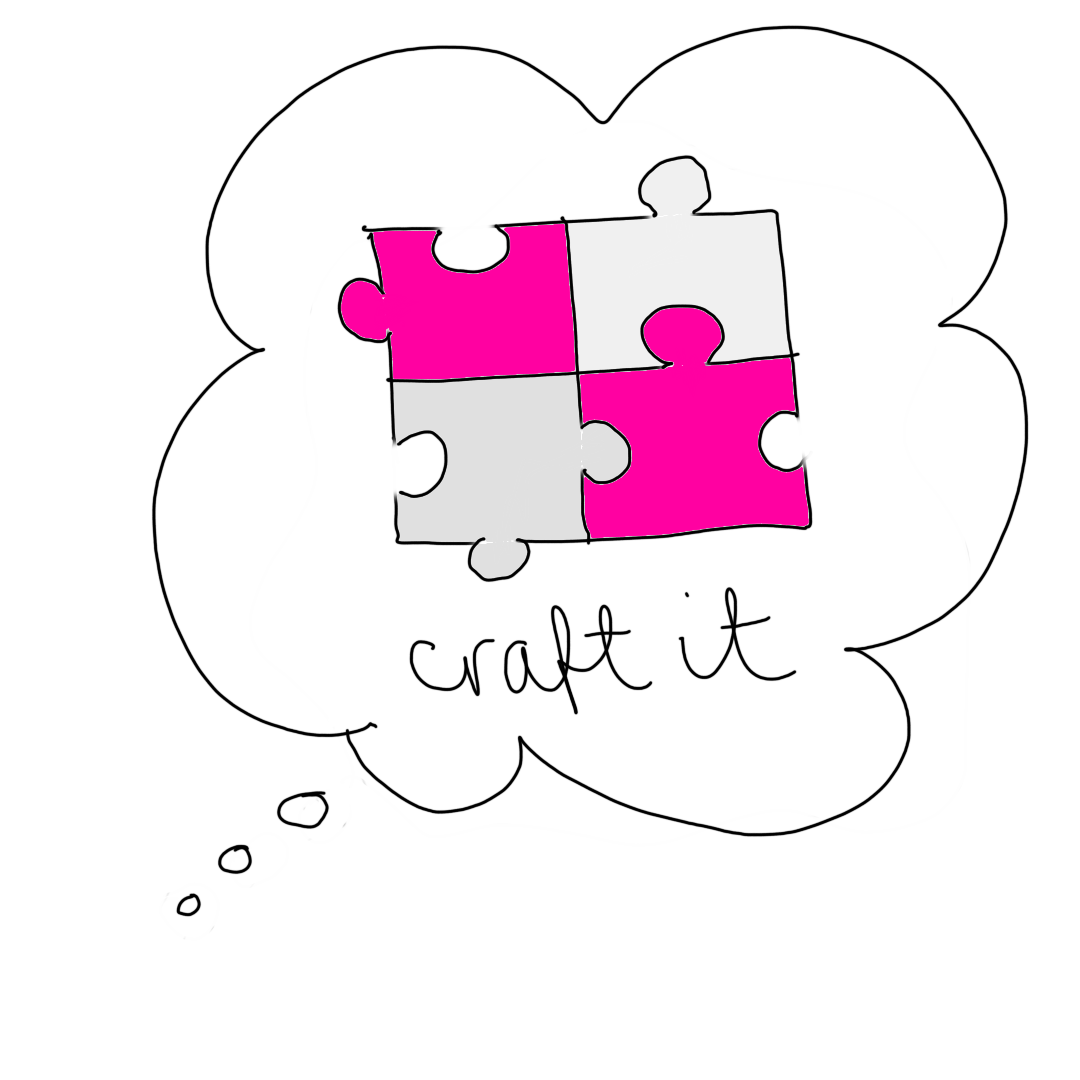
To tap into the energy of choice there are three stages which, if you follow them, will supercharge your confidence and credibility. These stages are draw it; distil it; craft it.

These stages help to generate the energy of choice because they…
- stop you from confusing and frustrating your audience and losing them to boredom and dis-interest
- demonstrate your credibility through reasoned arguments and accessible flow. Showing you have substance and expertise.
- build your confidence as you start developing and creating an experience which showcases you and what you care about in a positive, energising way.
The energy of choice encourages and enables movement because…
Message – accessing your powerful visual talents enables you to translate your thoughts and ideas in a way which others, even those without any prior knowledge, can understand. Making you more eloquent when sharing; improving your chances of engagement with your audience.
Order – the level of clarity you can achieve allows you to create a narrative which is made up of connected, complementary elements. This makes it easier for your audience to follow; feels less disjointed and uncomfortable. Increasing their confidence in you.
Value – when you mix in the ‘who’ and ‘why’ aspects of energy of understanding you will be able to create something which benefits your audience; is useful to them; adds value for them. You will be creating a valuable experience which increases your credibility and facilitates engagement.
Energy – the energy of choice combines the energy of usefulness, clarity and eloquence.
Putting it into practice
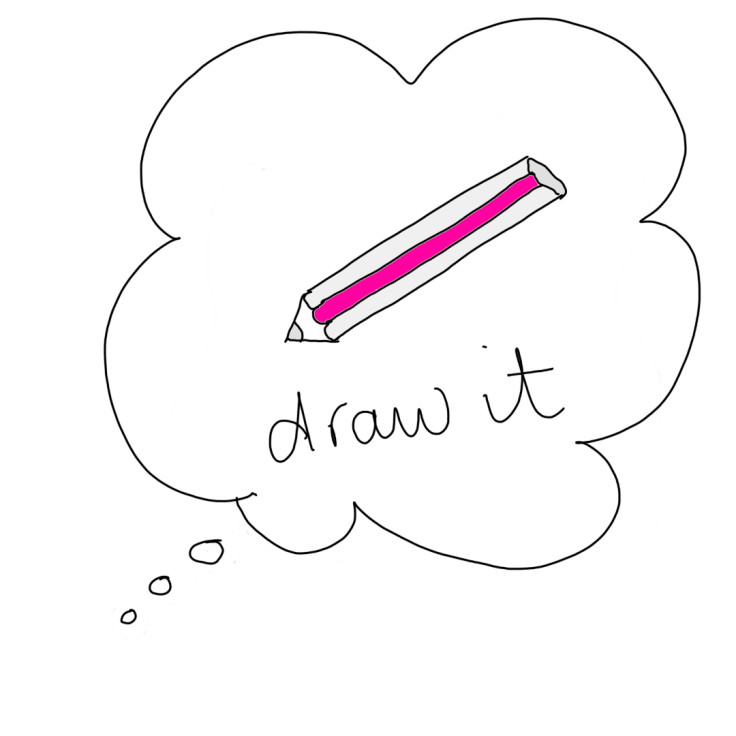
Stage 1: Draw it
Tapping into your visual mind helps you find the clarity to confidently articulate and share.
Already turned off because you think you can’t draw or you’re not artistic?
Well, please trust me when I say this is not about your ability to draw. If you can draw a line, circle, a square, a blob, a triangle… you are equipped for the ‘Draw it’ stage of the process.
Look at the doodle on the left!
Still not convinced? Well, as Dan Roam explains in his book, Draw to Win, ‘drawing is thinking’. Mind maps, charts, graphs etc are all visual representations to help share and articulate.
So…
- Grab some paper and a pen / pencil
- Draw a blob in the middle
- Write the ‘why’ from your energy of understanding inside the blob
- And you’re off to a flying start…
Going through this part of the process prepares you for Stage 2, ‘Distil it’.
Stage 2: Distil it
Finding the essence of your presentation brings the glue that holds it together.
There are many styles of presentation; many reasons they are happening; many stories to share. What unites them is, that in order to create something accessible for your audience to follow and connect with, there needs to be a theme.
In TED Talks by Chris Anderson, he refers to this as your throughline. “A connecting theme that unites each narrative element”.
It is a simple statement which captures the essence of your talk and factors in the ‘who?’ element of the energy of understanding.
It might be something that is personal and private to you. A sort of guiding light. Or it might be something you use in your presentation to explicitly show where you and your audience are headed.
Here’s how to go about capturing yours…
- Taking your doodles from Stage 1 and reflect on what you have drawn as well as the thought process you went through.
- What are you trying to say? Write this in no more than 50 words
- Now, imagine you are the ‘who?’ from your energy of understanding work. Picture yourself as a member of your prospective audience.
- Re-write what you are trying to say with them in mind. Again, no more than 50 words.
- Next look back over what you have written and encapsulate your essence; your throughline in a maximum of 15 words.
Going through this part of the process prepares you for Stage 3, ‘Craft it’
Stage 3: Craft it
Creating something that flows, builds and energises.
I’ve used the word ‘craft’ on purpose because it implies a sense of making something and that is exactly what you are doing. You are making a positive experience for your audience. You are giving them, and you, the best chance to connect and engage with each other through something shared and worthwhile.
Remember your ‘what?’ from the energy of understanding? It’s now time to add that into the mix.
Style of presentation, any ‘event’ rules and time restrictions are important parts of the ‘Craft it’ stage. They allow you to create a loose framework or scaffolding to your presentation.
They can also dictate how you go about structuring your presentation.
As it’s a bit tricky to be specific and there are a few variables, here are some tips to help you with Stage 3…
- Remember you are taking your audience on a journey (apologies for using the ‘j’ word); taking them from awareness to belief to trust. Factor this into the flow of your narrative so it builds and feels natural.
- Try using the What? | So What? | Now What? structure to help you get started
- Use your throughline, purpose for the presentation and picturing your audience as points of reference. Are you drifting? Is it relevant? Why would they care about that part? Does it add value for them? Does it help meet your aims?
- And don’t be afraid to edit, edit, edit! Maintain a balance between enough content to demonstrate credibility and the temptation to keep adding more and more. As the old saying goes, ‘less is often more’’
- Check out the Power of Three Message Map in Talk Like TED by Carmine Gallo. There are some useful tips on ‘Craft it’ here too.
Presenting with confidence and credibility is aided by easily accessible, flowing narratives created through the energy of choice. Those which unite you and your audience as you go through a positive experience together.
Because other people are able to understand, value and connect with what you are sharing. Because you feel empowered by the clarity and eloquence you gain.
To keep adding to your energy mix, in Part 4, we’re going to explore the motivational movement maker…
… the energy of delivery.
 Career Energiser Blog
Please leave a Reply